


Professional web design for Ontario lawyers is how your firm looks credible when someone compares three to five counsel websites before calling anyone. In Ontario that means LSO-safe headlines, AODA-conscious layout, PIPEDA-aware intake forms, and mobile click-to-call — not a US agency template with a maple leaf in the footer. (Yes, you should probably be entering your time right now. We will not tell.)
The bottom line
Ontario prospects decide in seconds: what you practice, where you are, how to reach you. Win with custom design, real photos, practice-area pages that match intent, and a Google Business Profile that matches your site. Everything else is decoration until those four work.
What professional web design means for Ontario lawyers
Professional web design is not picking navy blue instead of black. It is the full stack: visual hierarchy, site architecture, technical performance, intake workflow, and the compliance layer that keeps your marketing on the right side of the Law Society of Ontario. Generalist agencies rarely navigate all five. Firms that hire the lowest bidder typically rebuild within two or three years.
Seventy-five percent of potential clients visit two to five law firm websites before contacting anyone. They never email the firms they bounced from. Your homepage must answer three questions in under five seconds: what type of law you practice, where in Ontario you serve, and how to contact you. Toronto, Ottawa, Hamilton, London, and Kitchener-Waterloo each have distinct search patterns — your design should signal the markets you actually cover.
Canadian legal web design differs from US builds. LSO restricts claims like "specialist" and "best." PIPEDA governs how intake data is collected. AODA expects WCAG 2.1 AA on public-facing pages. LawOnline's Canadian design guide covers the structural benchmark; we focus on Ontario firms that need custom builds, not brochure refreshes. See our web development service for how we approach practice-area architecture.
Custom design beats template churn
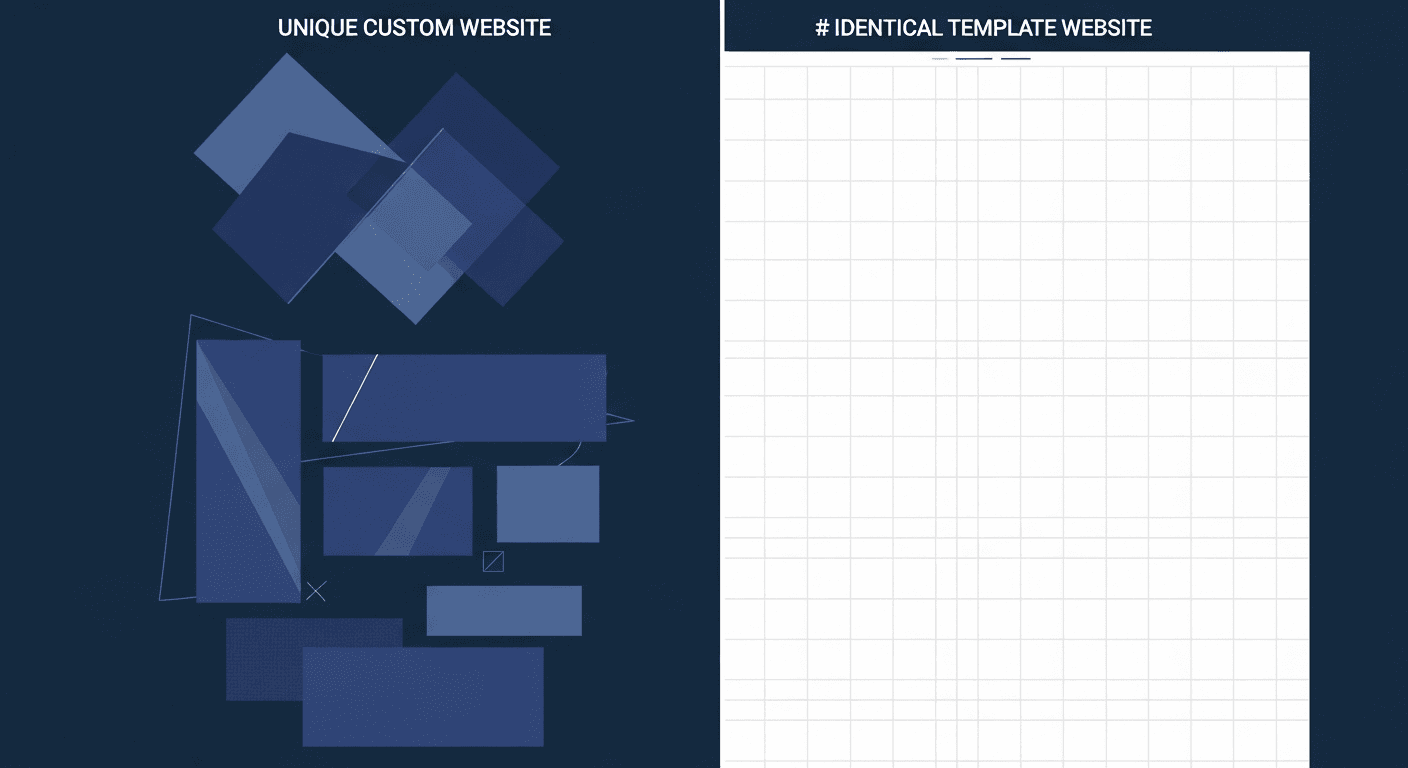
Most big-box legal marketing agencies put fifty Ontario firms on the exact same website skeleton, change the logo, and charge two thousand dollars per month. It is lazy. Google's algorithm sees duplicate structure. Prospects notice when your site looks identical to the firm two blocks away — especially in dense markets like Toronto and Ottawa.
Firms that built websites in 2012 often think they need a little SEO polish. Underneath, the site runs on obsolete code, fails mobile-first indexing, and loads like galvanized pipe from a renovation nobody inspected. You cannot put premium fuel in a broken engine. Sometimes the whole thing needs demolition and a modern rebuild — not another WordPress theme swap.
We build custom, or we do not build. DIY builders and AI site generators skip intake integration, schema markup, and LSO copy review. They work until a competitor with a purpose-built site outranks you for "family lawyer Toronto" and you wonder why the template stopped converting. For the national feature checklist your site still needs, see essential law firm website features.
Trust-focused design that passes the LSO sniff test
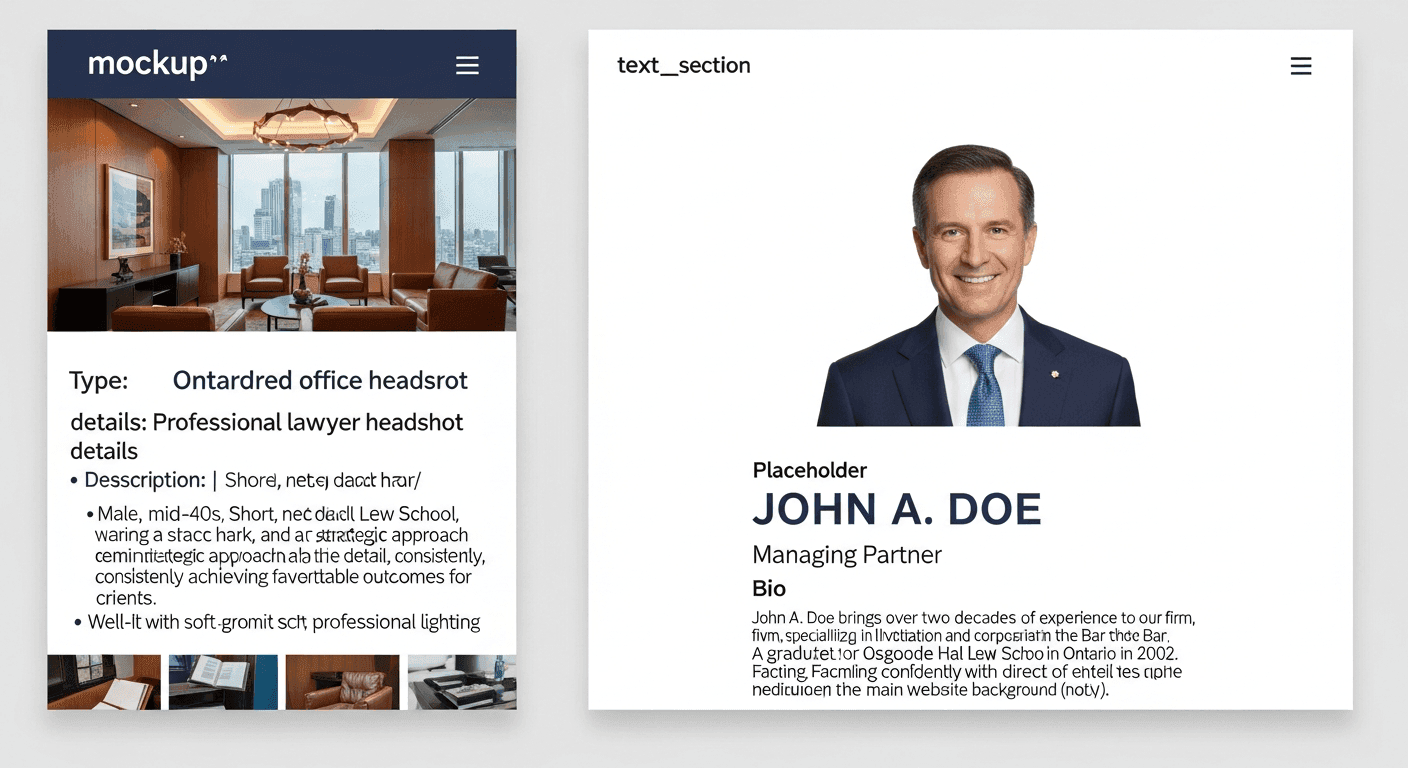
Trust signals answer the question every prospect asks silently: should I call this firm? Professional headshots — not a photo from 2012, not stock imagery of gavels and handshakes. Lawyer bios that read like humans, not credential dumps. Areas of focus described naturally. Community involvement in your Ontario market. A direct contact path for each lawyer where your firm size supports it.
LSO Rule 4.2-1 requires marketing to be demonstrably true, accurate, and verifiable. Rule 3.03 restricts calling yourself a specialist unless certified. Testimonials are permitted but cannot use emotional appeals — factual statements work; tear-jerker quotes do not. Your web designer should read LSO marketing guidance before writing headlines that promise outcomes you cannot verify.
Colour choices follow different rules than restaurants or dentists. Dark navy projects authority for criminal defence. Clean whites signal approachability for family law. Whatever palette you choose, WCAG 2.1 AA contrast requirements eliminate sleek-on-monitor choices that become unreadable on a phone in a parking lot. Most Ontario clients find you on mobile. Design for that screen first.
Mobile intake for Ontario markets

A site loading over three seconds loses roughly 40% of visitors before they ever see your number. Ontario searches for family lawyers, criminal counsel, and personal injury representation skew mobile and urgent. If your phone number lives in twelve-point font in the footer, you are donating consultations to counsel down the 401.
Nine out of ten slow law firm websites suffer from digital plaque. A managing partner adds a consultation widget. Then a live chat bot. Then a ten-megabyte headshot in front of a bookshelf. Over two years the plaque narrows bandwidth until the site takes eight seconds to load. Google's algorithm hates it. Impatient prospects hit back and call the next firm on the list.
Toronto firms compete on density. Ottawa firms serve bilingual and government corridors. London and Hamilton firms draw from hundred-kilometre radii. Each market needs click-to-call above the fold, short mobile intake forms, and practice-area pages that load fast on cellular data. Our Toronto website features guide covers capital-region specifics; the mobile intake principles apply province-wide.
LSO compliance and PIPEDA on your site
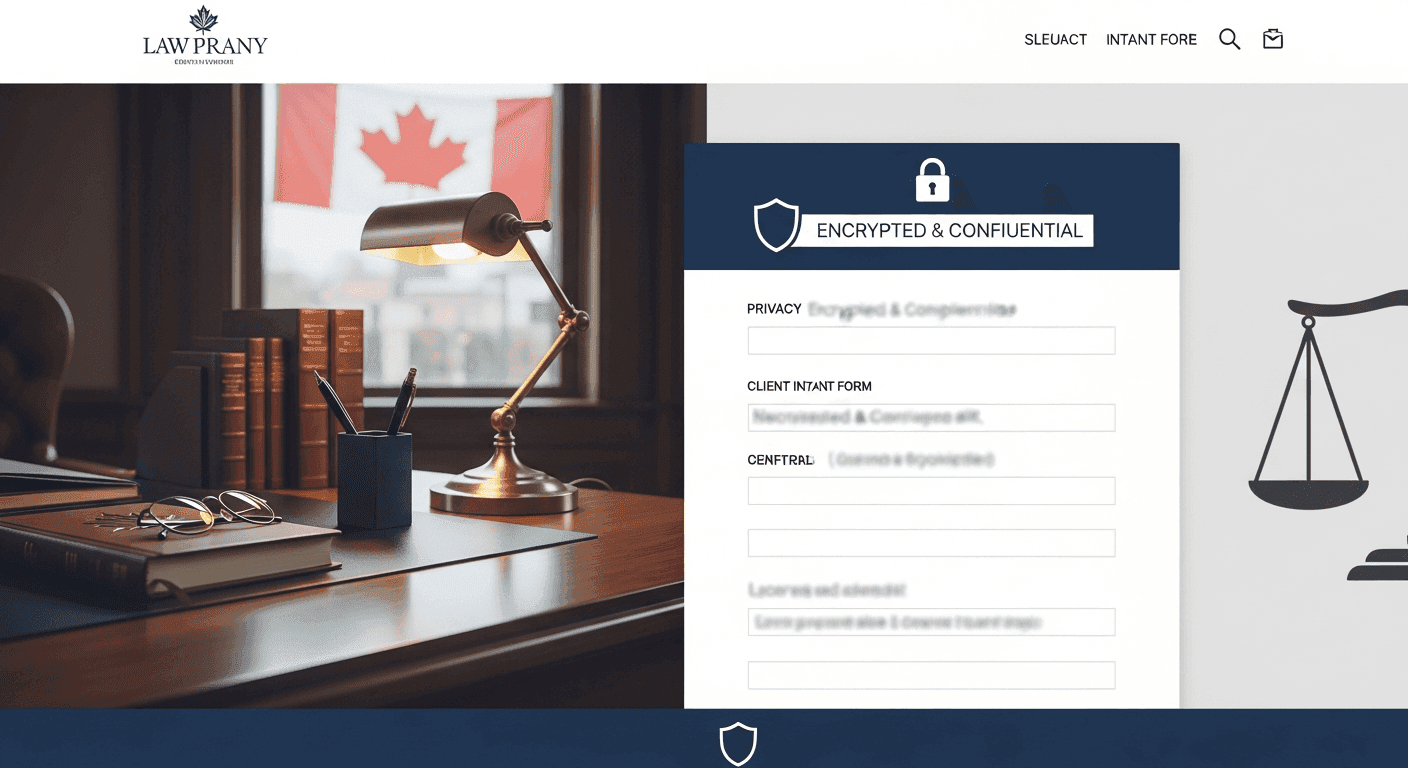
Your website is a marketing tool under LSO rules. Copy that works for dentists or contractors can create disciplinary exposure for lawyers. No guaranteed outcomes. No misleading settlement language. Professional designations displayed accurately — LL.B., J.D., K.C. where applicable. Required disclaimers on educational content that nothing creates a solicitor-client relationship.
Intake forms collect personal information. PIPEDA requires clear privacy notices, secure transmission, and defined retention. Hooking up an unencrypted generic contact form to collect separation details or charge information is a nightmare waiting for a privacy complaint. Do not touch the gas without secure hosting. Read the Office of the Privacy Commissioner PIPEDA overview before your designer wires a free plugin to sensitive fields.
AODA expects WCAG 2.1 AA on public-facing Ontario websites — proper heading hierarchy, keyboard navigation, alt text, contrast ratios that survive bright sunlight on a phone. Accessibility is not a checkbox for enterprise firms alone. A site that works for everyone works better for everyone, including the algorithm.
Design and local SEO belong together
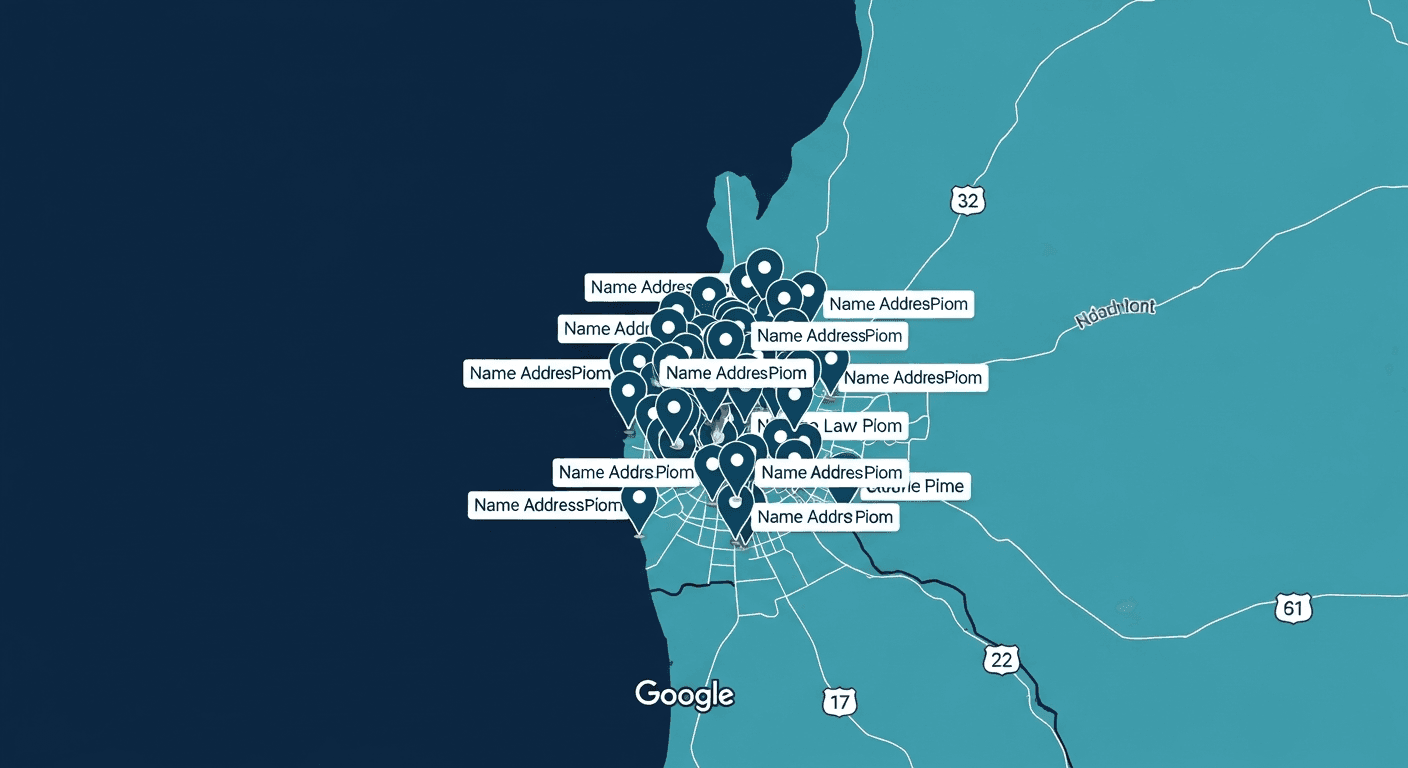
Pretty design without local SEO alignment is a brochure. Your NAP — name, address, phone — must match exactly on your site, Google Business Profile, and citations. Ghost listings from an old Bay Street office or a departed partner split your authority like tree roots wrapped around a pipe nobody checked since 2014. We merge duplicates before running paid campaigns.
Structured data matters: LegalService, Person with bar admissions, LocalBusiness with service-area attributes, FAQPage on practice-area URLs. Title tags optimized for your firm name alone miss the searches prospects actually type — "employment lawyer Ottawa," "estate lawyer Hamilton," "immigration lawyer Mississauga." Design choices should reinforce those intents, not fight them.
A firm ranking on page two of Google captures less than 1% of local search traffic. Claim your Google Business Profile before spending on a redesign. It drives a disproportionate share of calls and costs ten minutes. For the full local playbook, see local SEO for lawyers.
When not to hire a web design agency yet

We once talked a counsel out of a four-thousand-dollar monthly retainer because he had not verified the Google postcard sitting on his receptionist's desk. He ranked locally forty-eight hours later. We do not take retainers when the free fix comes first.
Do not book a discovery call if your Google Business Profile is unclaimed but your site otherwise works. Fix the postcard first. If your last agency registered your domain under their credentials, resolve the hostage situation before spending another dollar. Unethical agencies hold digital practices hostage when managing partners try to leave — you should own every credential from day one.
If your site is under five years old, loads cleanly on mobile, and intake works — but you want a rebrand because a competitor launched a prettier homepage — pause. Vanity design without conversion data is billable hours set on fire. Read hiring a law firm web designer before signing a twelve-month contract, and see flat-fee pricing for how we scope Ontario builds.
Straight answers
What is professional web design for Ontario lawyers?
It is custom site architecture, trust-focused visuals, and intake paths built for Ontario's regulated legal market — not a logo swap on a template shared with forty other firms. Professional web design for Ontario lawyers means LSO-safe copy, AODA-conscious layout, and mobile click-to-call that works before anyone reads your bio.
How much does a law firm website cost in Ontario?
Expect roughly two to five thousand dollars for a solid solo or boutique build, and ten thousand or more for multi-practice firms with custom intake integration. We scope flat project fees after discovery — no bundled ad spend, no twelve-month lock-in. If an agency quotes monthly without separating Google invoices, ask why.
Does my Ontario law firm website need to be mobile-friendly?
Yes. Most legal searches happen on phones. A site loading over three seconds loses roughly 40% of visitors before they see your number. Tap-to-call in the header beats a contact form buried in the footer — especially for family, criminal, and personal injury searches across Toronto, Ottawa, and regional Ontario markets.
What LSO rules apply to law firm website design?
Law Society of Ontario Rule 4.2-1 requires marketing to be demonstrably true, accurate, and verifiable — not misleading. Rule 3.03 restricts calling yourself a specialist unless LSO certified. Testimonials cannot use emotional appeals. Your designer should understand these constraints before writing headlines.
Should Ontario law firms use stock photos on their website?
No. Smiling models pointing at legal pads signal that you did not invest in authenticity. Real photos of your conference room, your staff, and your face convert better than glossy stock imagery every time. Clients choose counsel they feel comfortable with — not a handshake photo from a stock library.
Do I need a custom website or is a template enough for my law firm?
Templates work for firms with low competition and simple intake. In Toronto, Ottawa, Hamilton, and London, duplicate skeletons hurt both SEO and trust. Nine times out of ten, template-churn agencies put dozens of Ontario firms on the same structure, swap the logo, and charge monthly retainers. Google sees the pattern. So do prospects.
How does web design affect local SEO for Ontario lawyers?
Design and local SEO are one system. Page speed, heading hierarchy, schema markup, and NAP consistency between your site and Google Business Profile all influence map-pack visibility. A pretty site with ghost listings from an old office address still loses to the firm down the street with a verified pin.
When should an Ontario law firm redesign its website?
When the site is over five years old, not mobile-responsive, or loads like it was built during the Bush administration — rebuild, do not polish. If intake forms fail on phones, practice areas are crammed on one page, or your last agency holds your domain credentials, fix those before funding a vanity rebrand.
Ready for a straight answer on your Ontario web design?
We build custom law firm websites for Ontario practices. No template churn. No domain hostage games. LSO-conscious copy from the first wireframe.