


To hire a law firm web designer in Canada is to hire someone who understands provincial law society rules, PIPEDA on intake forms, and why a pretty homepage that loads in eight seconds loses cases before anyone reads your bio. (Yes, you should probably be entering your time right now. We will not tell.)
The bottom line
Hire a specialist when you need custom architecture, compliance review, and ownership of every credential. Hire a freelancer only when scope is narrow and you already control your domain. Walk away from any agency that registers your domain under their name, bundles ad spend, or puts fifty firms on the same template skeleton.
Why hiring a law firm web designer is not the same as hiring a freelancer
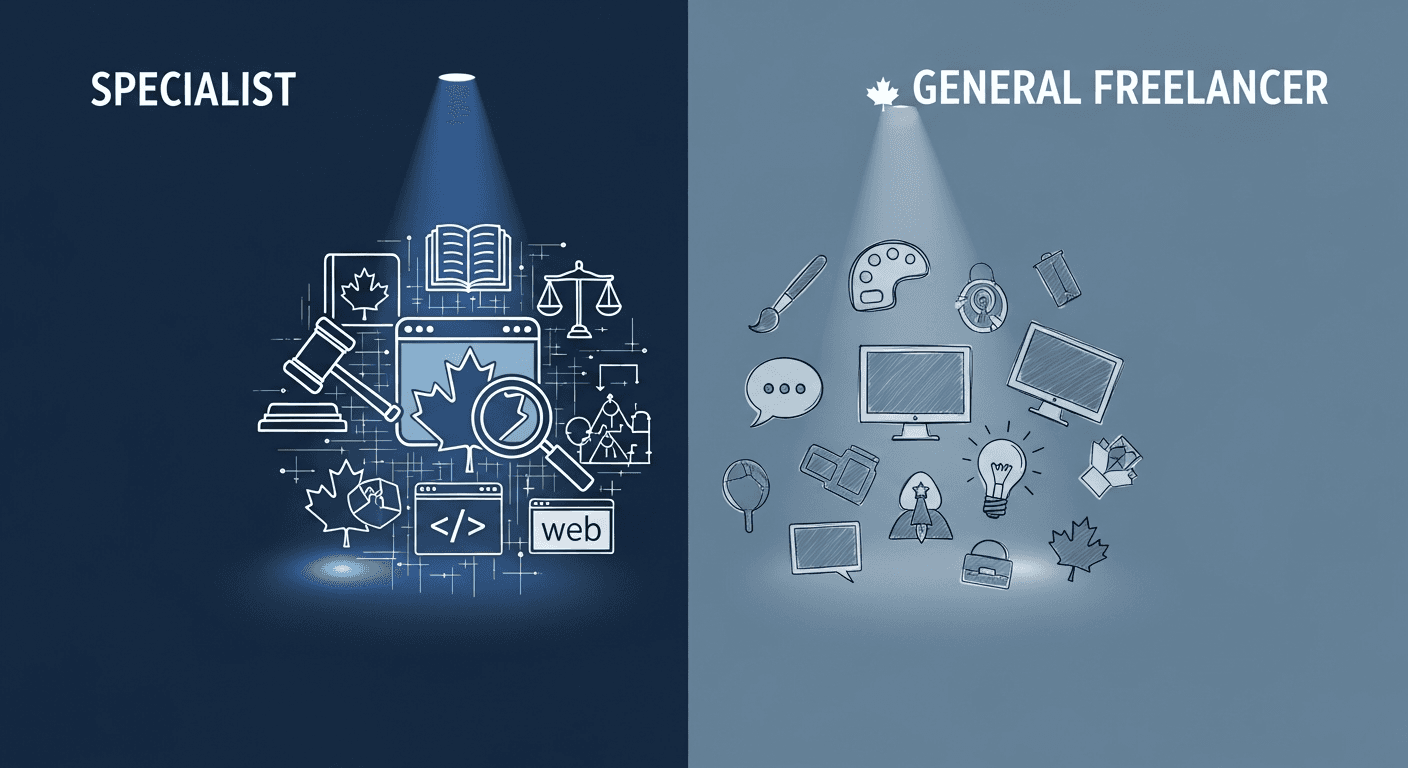
A freelancer can make your site look current. A law firm web designer builds intake paths, practice-area architecture, and compliance layers that survive contact from your law society and from Google's mobile-first indexing. In Canada that difference is not academic — it is the gap between a site that ranks for "employment lawyer Ottawa" and a digital brochure nobody finds.
Provincial rules vary. Law Society of Ontario marketing guidance restricts misleading claims and uncertified specialist language. British Columbia, Alberta, and Québec bar associations enforce parallel standards. PIPEDA governs how intake data is collected and stored. AODA expects WCAG 2.1 AA on public-facing Ontario sites. A generalist who last built a dental clinic will miss at least two of those constraints.
Seventy-five percent of potential clients visit two to five law firm websites before contacting anyone. They never email the firms they bounced from. Your designer's job is to keep you in that comparison set — with fast mobile load, clear practice-area signals, and copy that passes the law society sniff test. For what that design layer actually looks like in Ontario, see our professional web design for Ontario lawyers guide. This page is about who to hire, not how to pick navy blue.
Specialist agency, freelancer, or DIY — what actually fits your firm
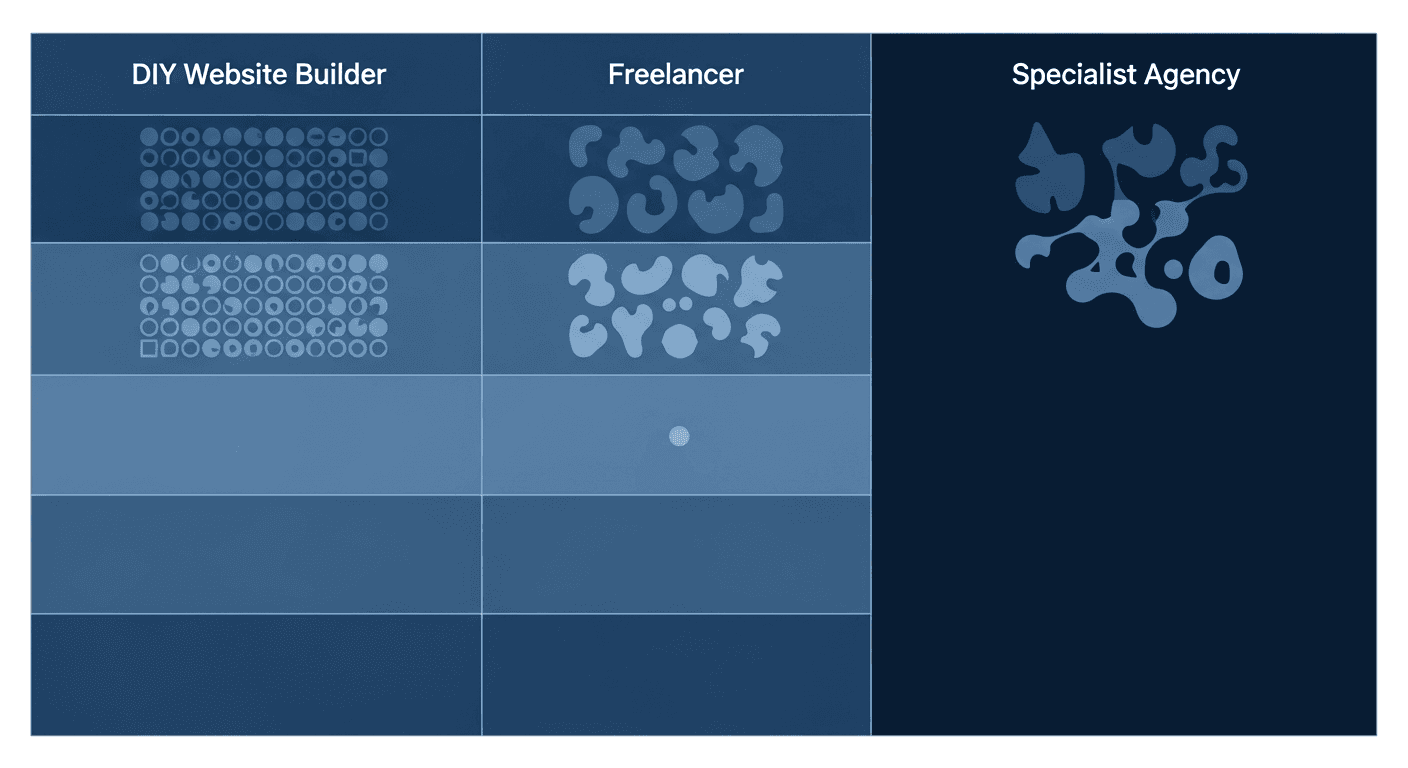
DIY builders — Wix, Squarespace, Clio's website builder — work when competition is low and intake is a phone number in the header. They fail when you need separate practice-area URLs, schema markup, bilingual Québec content, or intake that connects to Clio or Actionstep without dropping leads on the floor.
Freelancers fit narrow scope: a five-page refresh, updated bios, mobile fixes, when you already own domain and hosting and can supply compliance-reviewed copy. They struggle when the project needs local SEO architecture across Toronto, Vancouver, and Calgary, or when nobody on the team has read LawOnline's Canadian design benchmark.
Specialist agencies fit multi-practice firms, competitive metros, and any build where losing one high-value intake form costs more than the entire project fee. Nine times out of ten, the firm calling us after a failed freelancer build needed a specialist from the start — they just did not know how to vet one. Our web development service covers custom Canadian law firm builds; compare scope before you sign.
Red flags before you sign anything

We hear the same nightmare on discovery calls: "My last agency will not give me the login to my own website." Unethical shops register your domain under their credentials. When you try to leave, they hold the digital practice hostage. You should own domain, hosting, CMS, and analytics from day one. If the contract is silent on ownership, that silence is the answer — and it is not in your favour.
Template-churn agencies put fifty Canadian firms on the exact same website skeleton, change the logo, and charge two thousand dollars per month. Google sees duplicate structure. Prospects notice when your site looks identical to counsel two blocks away. Long-term ironclad contracts before you see a wireframe are another walk-away signal. Good work keeps clients — restrictive covenants should not.
Ad spend bundled into a single monthly invoice is a skim. You should pay your agency for strategy and pay Google directly for ads. Agencies that merge the two rarely show you the exact cost per retained case. Vanity metrics — impressions, likes — that never hit billable targets are the same category of noise. If it does not translate to signed retainers, the marketing is failing regardless of how polished the dashboard looks.
Questions to ask every Canadian law firm web designer
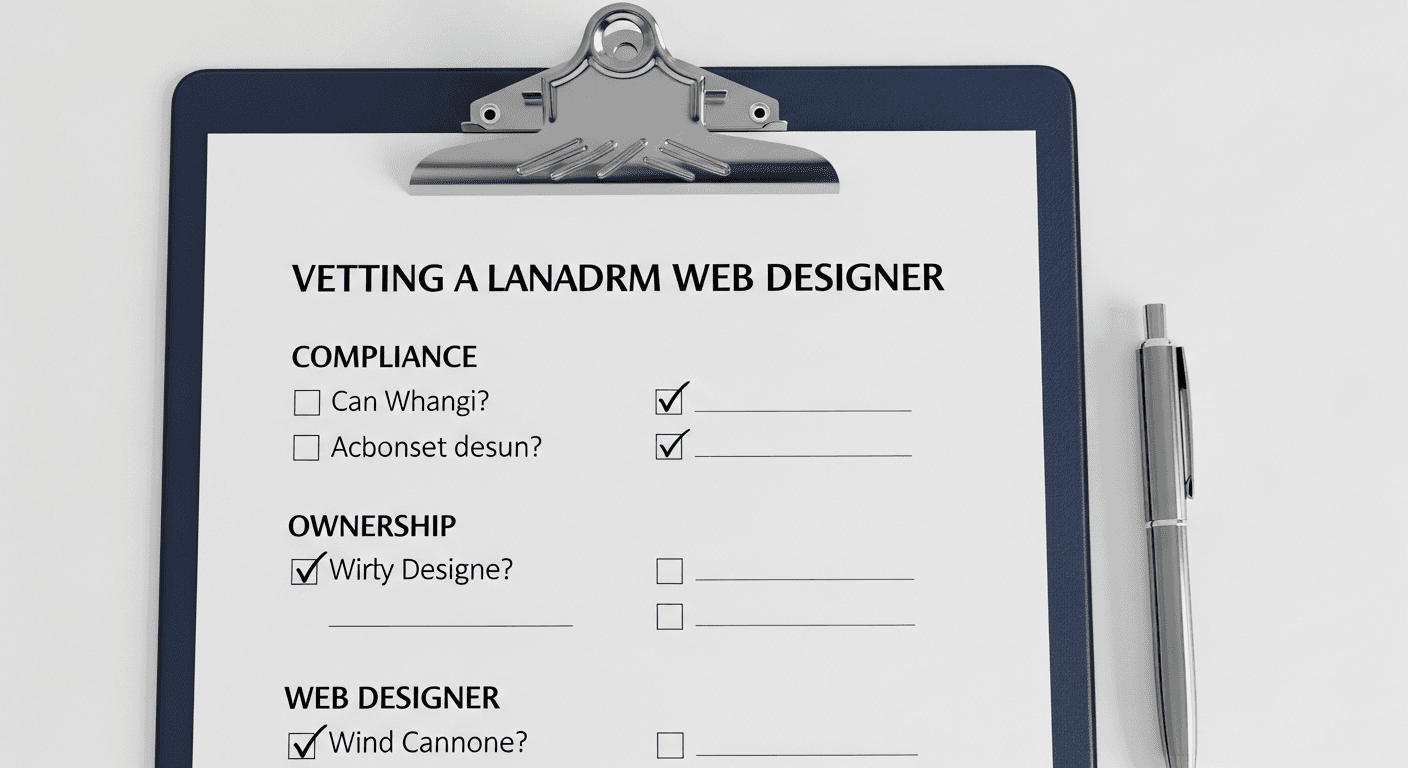
Bring this list to every discovery call. If answers arrive in jargon, ask again in plain language.
- Who registers the domain — our firm or yours? Where are credentials stored?
- Will copy be reviewed against our provincial law society advertising rules?
- How are intake forms encrypted and how does PIPEDA appear in privacy notices?
- What Core Web Vitals targets do you commit to on mobile?
- Do we get separate practice-area URLs with schema markup, or one long services page?
- What happens to our site and SEO if we end the relationship in twelve months?
- Is ad spend itemized separately from agency fees?
- Can you show live Canadian law firm sites you built — not theme demos?
Ask whether they integrate with your practice management stack. If intake cannot reach Clio, Actionstep, or your CRM without manual CSV exports, you will lose leads on weekends. Ask about maintenance SLAs — a site that goes dark during a criminal defence search at 11 p.m. is not a marketing asset. Read LSO marketing guidance yourself so you know when an answer sounds wrong.
What you should pay and what you should not

Let's look at the math. A slow website loading over three seconds causes a 40% bounce rate — four out of ten prospective clients leave before they see your number. Paying for SEO or ads that drive traffic to that reception area is billable hours set on fire. Fix speed and mobile intake before you fund a vanity rebrand.
Custom Canadian law firm builds typically land between three and eight thousand dollars for solos and boutiques, and north of fifteen thousand for multi-office firms with bilingual content and intake integration. Quotes under one thousand dollars for a "full custom legal site" usually mean template resale. Quotes with no ceiling and vague scope mean invoice creep.
We do not do "starting at" pricing games. We assess the firm, scope the work, and quote flat project fees or transparent retainers. You know the cost before we write a line of code. See flat-fee pricing and the feature checklist in essential law firm website features before you compare proposals apples to apples.
When not to hire us yet

We once talked a counsel out of a four-thousand-dollar monthly retainer because he had not verified the Google postcard sitting on his receptionist's desk. He ranked locally forty-eight hours later. We do not take retainers when the free fix comes first.
Do not hire anyone — us included — if your Google Business Profile is unclaimed but the site otherwise works. Fix the postcard first. If your last agency still holds your domain credentials, resolve the hostage situation before spending another dollar. If your site is under five years old, loads cleanly on mobile, and intake works — but you want a rebrand because a competitor launched a prettier homepage — pause. Vanity design without conversion data is not a hiring problem. It is a discipline problem.
Solo practitioners in low-competition rural markets with simple intake sometimes need a competent freelancer, not a full agency engagement. We will say so on the discovery call. Generic marketing content never turns down money. We do. For local visibility fundamentals before you hire, start with local SEO for lawyers.
Straight answers
Should I hire a freelancer or agency for my law firm website in Canada?
Freelancers fit brochure refreshes and tight budgets when you already own your domain and know your compliance rules. Agencies fit multi-practice firms, bilingual Québec builds, intake integration, and local SEO architecture. If your site must rank for practice-area searches in Toronto, Vancouver, or Calgary — hire a specialist, not a generalist who last built a restaurant site.
How much does it cost to hire a law firm web designer in Canada?
Expect roughly three to eight thousand dollars for a solid solo or boutique custom build, and fifteen thousand or more for multi-office firms with intake integration. Template churn shops quoting two thousand per month without separating ad spend are often reselling the same skeleton to dozens of firms. We scope flat project fees after discovery — no bundled Google invoices.
What questions should I ask before hiring a law firm web designer?
Ask who registers the domain, who holds hosting credentials, whether copy will be reviewed against your provincial law society rules, how intake data is encrypted under PIPEDA, what Core Web Vitals targets they commit to, and what happens if you leave after launch. If they cannot answer in plain language, keep looking.
Will my website comply with Law Society advertising rules?
Only if your designer reads them. Ontario LSO Rule 4.2-1 requires marketing to be demonstrably true and verifiable. BC, Alberta, and Québec bar associations have parallel restrictions. A general web designer who promises guaranteed outcomes or uses emotional testimonial language creates disciplinary exposure — not conversions.
Do I own my website after a designer builds it?
You should. Full stop. Domain, hosting, CMS login, analytics, and source code belong in your firm's name from day one. If an agency registers your domain under their credentials, they can hold your digital practice hostage when you try to leave. Resolve ownership before signing anything.
Can a general web designer build a compliant Canadian law firm site?
They can make it look professional. They rarely navigate PIPEDA-aware intake, AODA accessibility, practice-area SEO architecture, and provincial advertising rules in one build. Firms that hire the lowest generalist bidder typically rebuild within two or three years when compliance gaps surface.
How long does it take to hire and launch with a specialist?
Vetting takes one to two weeks if you compare three candidates with clear briefs. Build timelines run two to eight weeks depending on practice-area count, bilingual requirements, and content readiness. Firms that arrive with bios, photos, and a signed compliance checklist launch faster than firms still debating hex codes.
What red flags signal a bad law firm web design agency?
Guaranteed number-one Google rankings in thirty days. Domains registered in the agency's name. Ad spend bundled into one invoice. Identical portfolio sites with swapped logos. Twelve-month ironclad contracts before you see a wireframe. Any of these is a reason to walk away.
Ready to vet your next law firm web designer?
We build custom law firm websites for Canadian practices. Full ownership. No template churn. No domain hostage games. Book a discovery call if you want a straight answer on scope and flat fees.